Somewhere between 1 and 3 PM, most people fall off a cliff. It is not a character flaw and it is not just lunch. Three separate things stack at the same time.
What is actually happening
1. The circadian dip
Your body runs a natural alertness trough in the early afternoon, roughly twelve hours offset from the deepest point of your night sleep. It happens whether or not you ate. Cultures with an afternoon rest period did not invent it out of laziness — they built around a real signal.
2. Your morning caffeine is leaving
Caffeine has a half-life of about five to six hours in most adults. Coffee at 7 AM means roughly half of it is gone by 1 PM, and the adenosine it was blocking has been accumulating the entire time. You do not just return to baseline — you feel the backlog.
3. The lunch effect
A large, carbohydrate-heavy meal reliably deepens the dip. It is not the only cause, but it makes an existing trough worse.
The fix is timing, not volume
The instinct is to drink more when you feel the crash. That is already too late — you spend twenty to forty minutes waiting for a stomach-absorbed dose to arrive while you are at your worst.
Take the second dose before the dip, not during it. If your crash reliably lands at 2 PM, the dose belongs around 1 PM. You are heading it off rather than digging out of it.
This is where the format matters. A pouch works on a shorter runway, so if you did get caught out, you are looking at minutes rather than the better part of an hour.
Protecting your sleep
Here is the trap: fixing the afternoon by caffeinating at 4 or 5 PM produces a worse night, which produces a worse afternoon tomorrow. That loop is how people end up needing 600mg a day to function.
Practical guardrails:
- Set a hard cutoff eight hours before bed. For an 11 PM bedtime, that is 3 PM. Research has found caffeine taken six hours before bed measurably reduces sleep time even when people do not feel it.
- Cap the day. The FDA cites 400mg per day as a level not generally associated with negative effects for healthy adults. At 200mg per pouch, that is two — and that budget includes your coffee.
- If it is past your cutoff, do not caffeinate. Go outside for ten minutes, get some water, and take the slower afternoon. Tomorrow is worth more.
The non-caffeine levers that actually work
Caffeine is the fastest tool, not the only one:
- Daylight. Ten minutes of bright outdoor light is a real circadian signal. Far stronger than any indoor lighting.
- Water. Mild dehydration presents almost identically to fatigue and is extremely common by mid-shift.
- A lighter lunch. Protein-forward with fewer fast carbs blunts the post-meal drop.
- Movement. Five minutes of walking beats fifteen minutes of pushing through at a desk.
The realistic plan
Morning caffeine when you start. Second dose about an hour before your known dip. Nothing after your cutoff. Daylight and water in the gaps. Protect the sleep so tomorrow does not need rescuing.
The afternoon crash is predictable, and predictable problems get scheduled around instead of suffered through.
SHOP FEINE — 200MG PER POUCHTRY IT FOR YOURSELF.
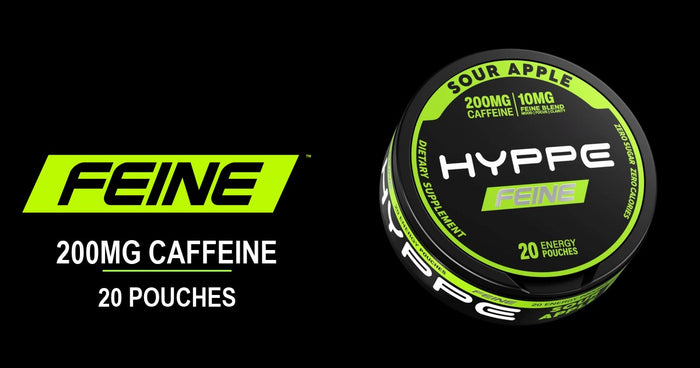
200mg caffeine and L-theanine. 20 pouches per can. Zero sugar, zero nicotine.
SHOP FEINE